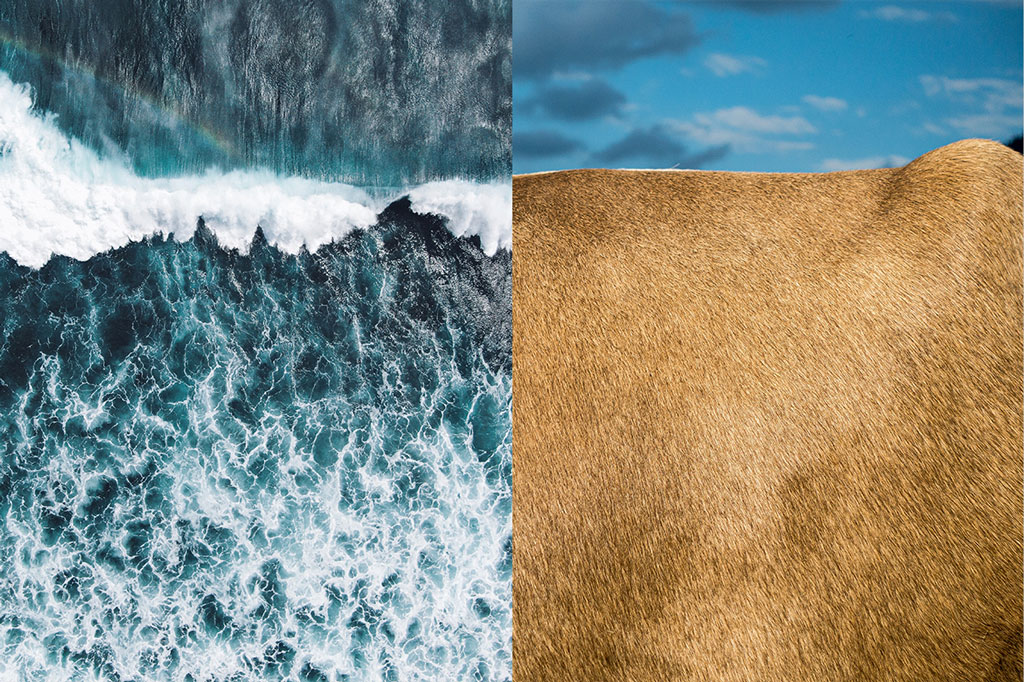
The difference between bovine and marine collagen
Two of the most common sources of collagen are bovine and marine. And let’s start with the most obvious difference: marine collagen comes from fish and bovine collagen comes from cattle:
- bovine: collagen extracted from cattle skin and bones
- Marine: collagen extracted from fish skin and bones
But what does it even mean to you, and why has Nutrinic chosen marine collagen for Kollagen+?
Marine collagen is exclusively type 1 collagen
There are over 28 different types of collagen in the body. The most common collagen type, however, is type 1. Type 1 makes up approximately 80-90% of the collagen in the skin. But the body’s natural production of i.a. type 1 collagen decreases from around the age of 25-30, which contributes to us developing wrinkles and loose skin.
Collagen from bovine sources typically contains both type 1 and type 3 collagen, while marine collagen contains only type 1 collagen.
As a starting point, marine collagen therefore consists of more of the type of collagen that is found most in the skin.
Marine collagen is highly absorbable

Research suggests that marine collagen is absorbed up to 1.5x better than bovine collagen1. The higher the absorbability, the more collagen finds its way through the digestive system and is absorbed into the body.
The collagen that you find in Kollagen+ has also been hydrolysed, which means that the already small collagen proteins have been split into peptides, so that they are even easier for the body to digest and absorb.
As far as we know, no scientific studies have been done that directly compare the effect of marine and bovine collagen. Therefore, we cannot say with certainty that marine collagen is most effective, but something could indicate that when it is absorbed better.
Marine collagen is climate-friendly
Although collagen from fish and cattle are often both extracted from surplus production, there is a big difference in how much CO2 the respective productions emit along the way.
Cattle production and agriculture account for approximately 25% of agriculture’s CO2 emissions in Denmark2.
Fish production generally releases far less greenhouse gas than most meat products, and therefore also has a lower climate emission.
A lot of bovine collagen is produced in Brazil and is often sold as “grass fed” and “free range” to make it sound sustainable. However, increasing cattle production in Brazil is notorious for being one of the causes of deforestation3. Therefore, we recommend avoiding bovine collagen from Brazilian cattle.
There is a difference in fish production
Not all fish production is sustainable. Today, the majority of the wild fish stock is fully exploited or even overfished. Most producers can only trace their products back to their processing facilities, but have no control over how and where the fish is caught.

That is why Nutrinic also sets very high standards for our production. In fact, the raw material in our collagen powder comes from the world’s only ASC-certified collagen production. In practice, this means that we can trace our product all the way back to the source and all processing processes along the way. This is your guarantee that the raw material in our collagen powder is both sustainably produced and comes exclusively from a single source.
Benefits of bovine collagen
One advantage of bovine collagen is that it is cheap to produce. This makes it a popular ingredient in many supplements because it is typically cheaper to produce collagen from cattle than marine collagen. Therefore, it is also a good alternative to marine collagen if you would like an affordable collagen supplement.
Summary: marine collagen vs bovine collagen
It is for the aforementioned reasons that Nutrinic has chosen to use marine collagen in our collagen supplement.
The collagen peptides in Collagen+ come from sustainably farmed, food-grade freshwater fish. The entire production is stable and fully traceable thanks to the ASC certification. Collagen+ is also supplemented with vitamin C and zinc. Vitamin C contributes to the normal formation of collagen, which is important for normally functioning blood vessels, bones, cartilage, gums, skin and teeth. Zinc contributes to maintaining normal hair and nails.
That’s why you should choose marine collagen:
- Absorbed up to 1.5x better than bovine collagen
- Climate-friendly production
- Type-1 collagen is the most common in the body